A mobile HR app is no longer just a nice extra. For many businesses, it has become the main way employees interact with HR. As teams spread across different locations, mobile-first HR software is changing how companies manage people, processes, and performance. When employees can reach HR services anytime, anywhere, engagement improves, decisions happen faster, and daily operations run more smoothly. This article looks at how a mobile HR app creates real value for businesses, not just convenience and why companies with frontline, hybrid, or multi-location teams increasingly rely on mobile HR as part of their core HR strategy.
From Desktop HR Systems to “HR in Your Pocket”
Many HR systems were built for a world where people worked at desks during office hours. That doesn’t match how businesses run today. Large parts of the modern workforce, shift workers, remote staff, field teams, find it difficult or impossible to log into a desktop HR portal.
Email-based HR processes add even more friction. Simple tasks like checking leave balances or updating personal details can turn into delays and back-and-forth emails for HR teams to manage.
In manufacturing, retail, logistics, healthcare, and hospitality, employees rely on their phones. A mobile HR app becomes their direct link to the company, letting HR reach everyone including deskless and frontline staff without depending on shared computers or printed notices. It also removes time barriers. Employees can check schedules, submit requests, or view payslips outside office hours, which fits how people actually work today.
Employee Self-Service That Helps Both Staff and HR Teams
A good self-service experience lets employees manage their own information. Through a mobile HR app, staff can update personal details, bank information, and emergency contacts without emailing HR or filling out forms. This reduces admin work for HR teams and keeps records accurate and up to date without constant follow-ups.
Access to information also builds trust. When employees can view digital payslips and employment records directly on their phones, there’s no need to wait on HR or dig through inboxes. For businesses, having everything stored in one place also makes audits and compliance easier to manage.
Leave requests are one of the most common HR interactions. A mobile HR app simplifies this with clear workflows and real-time status updates, so managers can review and approve requests quickly and keep things moving.
Modern Attendance Tracking Built for Mobile Teams
Traditional biometric devices work well in fixed locations but fall short for remote or field staff. Mobile HR apps solve this with GPS-based attendance and geofencing, so employees can only clock in from approved locations. This improves accuracy, reduces the need for extra hardware, and gives HR and payroll teams better visibility, especially for businesses managing multiple sites or branches.
When employees can see their shifts and schedules on a mobile app, confusion around rosters drops significantly. Clear visibility helps staff plan their time better and reduces disputes over attendance or overtime. For managers, accurate attendance data feeds straight into payroll, making the whole process more reliable.
Saving Time and Reducing Costs Through Mobile HR
When employees manage routine tasks themselves, HR teams spend less time answering repetitive questions and more time on strategic work like planning and development. This becomes especially important as a business grows and headcount increases.
Managers often delay approvals when they’re away from their desks. Mobile access removes this bottleneck, approvals that used to take days can now happen in minutes, keeping operations on track and improving the employee experience.
Digitizing HR workflows also cuts down on paperwork, storage costs, and processing time, while creating clearer records for audits. For businesses managing multiple branches, this consistency matters even more.
Easier Onboarding for New Employees
A mobile HR app lets new hires upload documents and complete forms before their first day, reducing admin pressure and helping employees feel prepared and welcomed from day one. Clear onboarding checklists on mobile devices also help new employees understand what’s expected of them, keeping the experience consistent across teams and locations.
Security and Compliance Built In
Employee data is sensitive, and a good mobile HR app should protect it properly. Strong authentication methods, including biometric login and multi-factor authentication, offer better protection than passwords alone. Data should be encrypted both in transit and stored securely, with cloud infrastructure that supports growth without compromising security. For businesses operating across different regions, centralized HR systems also make it easier to manage access, retention, and reporting in line with local data protection requirements, including GDPR where applicable.
How VixHR Supports Mobile-First HR for Growing Businesses
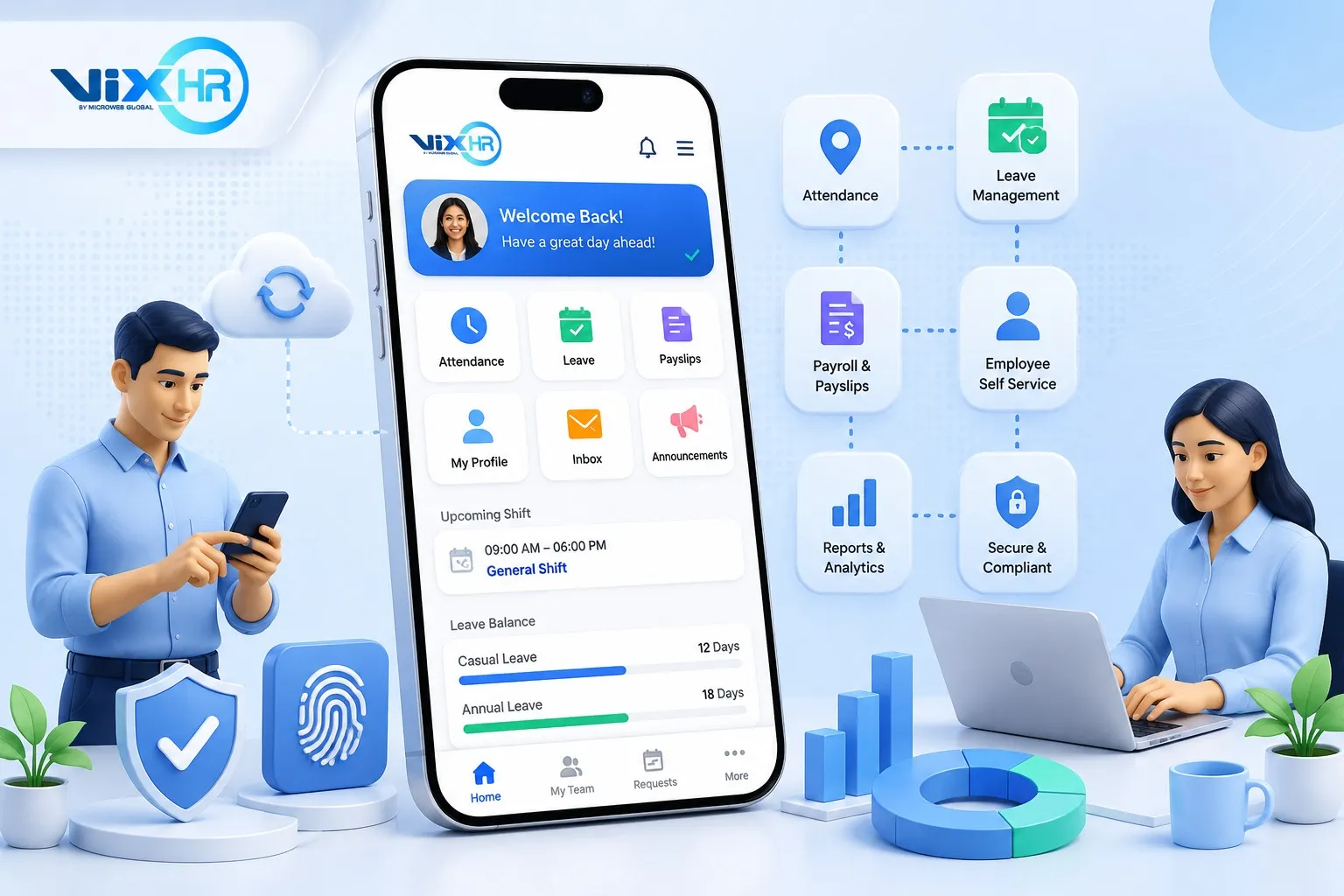
VixHR offers a mobile app that brings key HR functions to employees and managers including attendance, leave management, and payroll access, all from one connected dashboard.
VixHR is built to support businesses across Sri Lanka, South Asia, and the Middle East, with the flexibility to suit growing companies managing multiple branches, departments, and workforce types from office-based teams to frontline operations.
When a Mobile HR App Becomes a Business Advantage
Many businesses reach a point where manual HR processes and desktop-only systems start holding them back. Spread-out teams, growing headcount, and complex attendance needs are common signs that it’s time to move to a mobile HR app.
Frequently Asked Questions About Mobile HR Apps
What is a mobile HR app for employees?
A smartphone-based app that lets employees access HR services like leave management, attendance tracking, and payslips anytime, anywhere. It’s part of a broader HR system and is especially useful for remote, hybrid, and deskless teams.
How does a mobile HR app improve employee engagement?
By giving employees direct access to HR information, real-time updates, and clear communication. Features like push notifications help employees stay informed and connected, even when they’re not at a desk.
Can a mobile HR app reduce HR workload and admin costs?
Yes. Employee self-service through a mobile HR app cuts down on routine HR questions about leave balances, payslips, and personal details. This lowers admin work and lets HR teams focus on more strategic priorities.
Is attendance tracking through a mobile HR app accurate?
Modern mobile HR apps use GPS and geofencing to track time accurately. This works especially well for field staff, remote employees, and teams working across multiple locations, reducing reliance on physical biometric devices.
Which businesses benefit most from a mobile HR app?
Businesses with spread-out teams, frontline or deskless workers, or multiple locations benefit the most. Growing companies often use mobile HR apps to improve visibility, simplify HR operations, and support growth across regions.
If you’re ready to see how a mobile-first approach can transform HR at your business, book a free demo with VixHR to see how it fits your team’s needs.